
Skip to content
Free shipping over $200FedEx 2-day shipping
Routine Peptides
HPLC tested
Representative HPLCPer lot
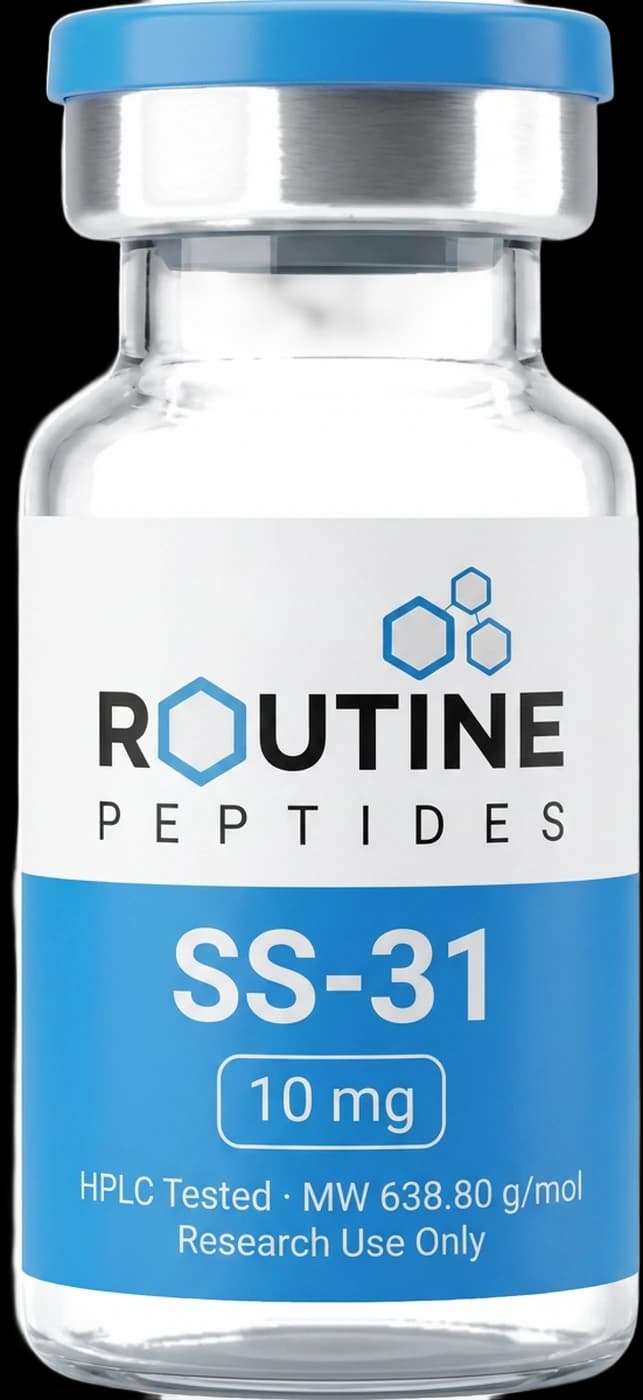
SS-31 research vial

Longevity & Cellular

SS-31

Mitochondrial Function Studies

Third-party testedCOA per lotView COA · 99.73%
$7210mg · $7.20/mg

Quantity

1

Ships from the United States with tracking · free shipping over $200

PassedSterility & Endotoxins
PassedNet Content & Purity
Research use only
Third-party tested
COA with every lot
Tracked shipping

Researchers also added

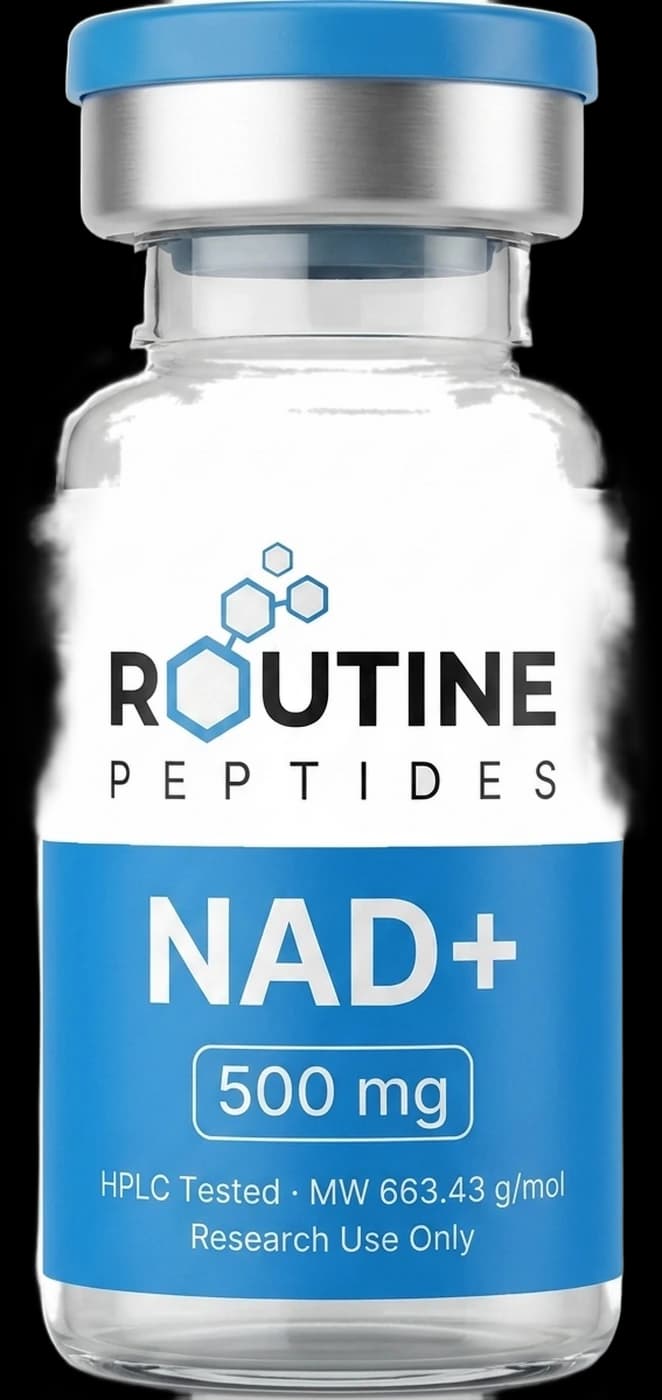
NAD+

500mg

$90.00

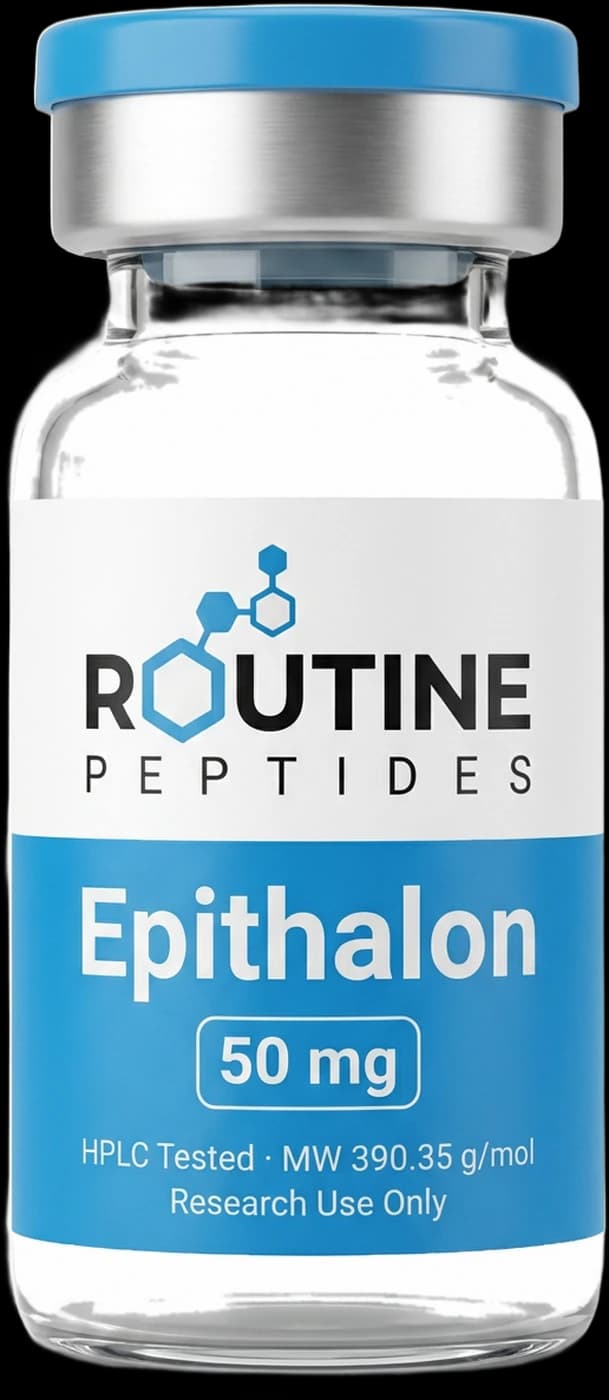
Epithalon

50mg

$120.00

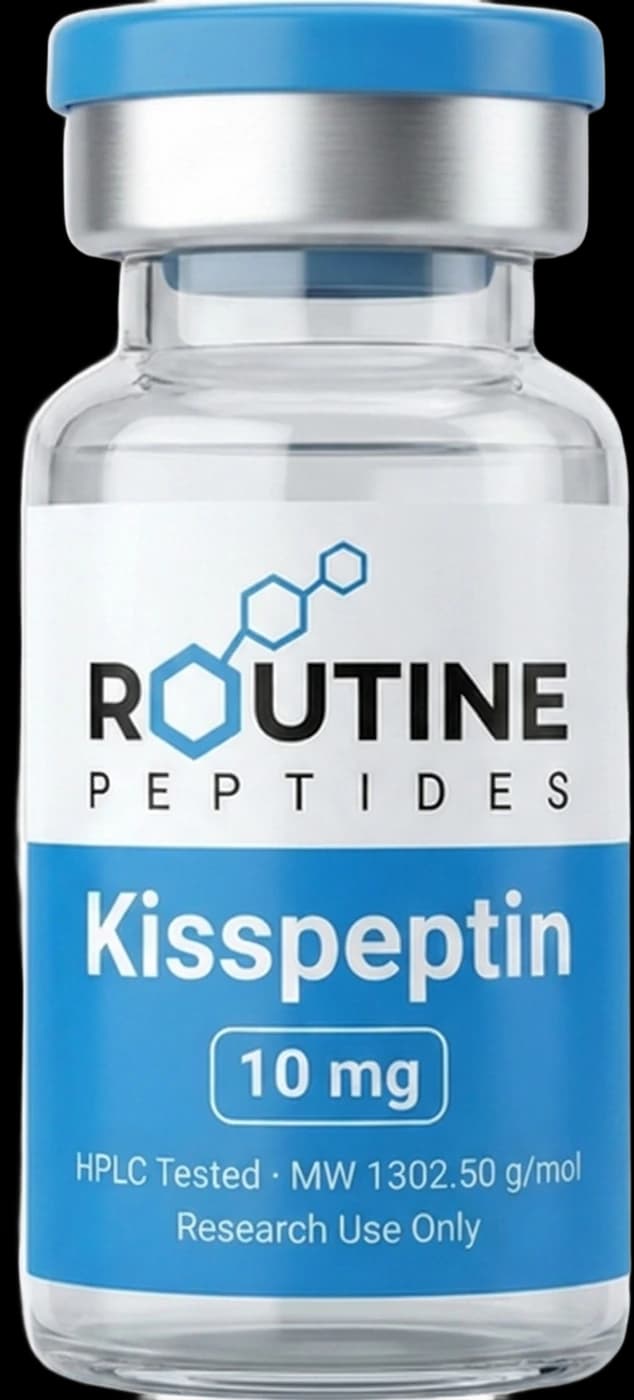
Kisspeptin

10mg

$90.00

Authenticity

Every vial carries a code

Scan the code on the label to pull up every published certificate for that compound — the same reports the third-party laboratory issued, batch by batch. Traceable from the laboratory that tested it to your bench.

Verify a batch →

Verified, lot by lot

Per lot
  • Independently tested

    Purity is quantified by reverse-phase HPLC and identity confirmed by mass spectrometry, by an outside laboratory rather than in-house.

  • A certificate for your lot

    The report that ships with your order describes the batch you received — not the product line, and not a representative sample.

  • COA-backed replacement

    If material does not match the certificate issued for its lot, we replace it or refund it. Send us the lot number and we will trace it.

  • Tracked dispatch

    Tracking is issued when the label is created, so the shipment is traceable from the moment it leaves us.

🫀
28%
Improved Cardiac Output
Phase II heart failure trial data
4
Amino Acids
D-Arg-Dmt-Lys-Phe-NH2 tetrapeptide
🔬
100+
Published Studies
Preclinical and clinical research papers
🎯
4
Research Areas
Heart Failure · Reperfusion Injury · Mitochondrial Aging & more

About this compound

What SS-31 is

C32H49N9O5

SS-31, also called elamipretide, is a four-residue peptide that concentrates at the inner mitochondrial membrane. It does not bind a receptor; it associates with cardiolipin, a phospholipid specific to that membrane and central to its structural integrity. Research examines mitochondrial function and cristae architecture.

Formula
C32H49N9O5
Molecular weight
638.8 g/mol
Form
Lyophilized powder
CAS / ID
Elamipretide, MTP-131, Bendavia
Read the full SS-31 research monograph →

Full specification

Sequence
D-Arg-Dmt-Lys-Phe-NH2
Molecular weight
638.80 g/mol
Molecular formula
C32H49N9O5
Physical form
Lyophilized powder (5mg)
Documented purity
Quantified by HPLC, reported per lot
Storage
-20°C for long-term stability
Solubility
Soluble in water

How it works

How SS-31 works

The pathways SS-31 acts on, and what each one does. Signalling described from preclinical models.

Inner Mitochondrial Membrane Stabilization

Cardiolipin Binding

Rather than binding a receptor it associates with cardiolipin, a phospholipid found only in the inner mitochondrial membrane and central to its structure. That specificity is what concentrates it there.

  • Binds cardiolipin at the inner membrane
  • Stabilises electron-transport supercomplexes
  • Cristae morphology restored in damaged mitochondria

Mitochondrial Reactive Oxygen Species Reduction

ROS Scavenging

Stabilising cristae architecture is reported to reduce electron leak — the proposed route to lowering ROS production at source rather than scavenging it afterwards.

  • The Dmt residue provides targeted antioxidant capacity
  • Mitochondrial superoxide generation reduced
  • Electron transport efficiency preserved

Bioenergetic Function Restoration

ATP Synthesis

ATP synthesis is measured in models of mitochondrial dysfunction, where the question is whether structural stabilisation translates into recovered output.

  • Membrane potential restored
  • ATP synthase coupling improved
  • Respiration raised in aged tissue models

Uses & applications

What SS-31 is researched for

The main areas under study, and the study-reported figures behind them.

Cardiology Research

Heart Failure

Cardiac mitochondria are unusually dense, which is why heart failure models feature so heavily for a cardiolipin-binding compound.

Daubert MA et al. 2017

Ischemia Research

Reperfusion Injury

Reperfusion generates a burst of reactive oxygen species, making it a direct test of the proposed mechanism.

Zhao K et al. 2007

Aging Biology

Mitochondrial Aging

Cristae architecture and bioenergetic output are measured in aged tissue against younger controls.

Siegel MP et al. 2013

Nephrology Research

Renal Protection

Renal tubular cells are also mitochondria-rich, and the endpoints mirror the cardiac work.

Birk AV et al. 2013

What the published work measures

The endpoints reported across the literature for this compound. The figures belong to the individual papers, not to us.

  • Cardiac Output Improvement (Phase II HF Trial)
  • Mitochondrial ROS Reduction (I/R Models)
  • ATP Production Improvement (Aged Muscle)
  • Cardiolipin Peroxidation Reduction

Molecular structure

The SS-31 molecule

A computed low-energy conformer built from this compound's published connectivity and stereochemistry, paired with its verified reference values.

Drag to rotate

95 atoms

CONH

95 atoms, 96 bonds, C32H49N9O5. Connectivity and stereochemistry from PubChem CID 11764719. The arrangement is one computed low-energy conformer, not a measured structure — a flexible peptide adopts many conformations in solution.

C32H49N9O5

Molecular formula
C32H49N9O5
Molecular weight
638.8 g/mol
Sequence length
4 residues
CAS / ID
Elamipretide, MTP-131, Bendavia
Physical form
Lyophilized powder
Documented purity
Quantified by HPLC, reported per lot

Third-party verified

Independently tested, lot by lot.

Every batch of SS-31 is sent to an accredited independent laboratory before it ships. Here is what we screen for.

HPLC purity analysis

Quantifies purity and reports it on the lot certificate

Mass spectrometry

Verifies the exact molecular identity

Heavy metals screening

Lead, arsenic, cadmium & mercury

Endotoxins (LAL)

Bacterial endotoxin levels

Sterility testing

No microbial contamination

Net peptide content

Actual peptide mass per vial verified

FAQ

Common questions about SS-31

What is SS-31?

+

SS-31, also called elamipretide, is a four-residue peptide that concentrates at the inner mitochondrial membrane. It does not bind a receptor; it associates with cardiolipin, a phospholipid specific to that membrane and central to its structural integrity. Research examines mitochondrial function and cristae architecture.

What is SS-31 researched for?

+

Published research on SS-31 concentrates on Heart Failure, Reperfusion Injury, Mitochondrial Aging and Renal Protection. Each of those areas is summarised further up this page with the citation it comes from, and the full reference list — 4 indexed publications — sits at the bottom. Study designs and concentrations vary considerably between publications, so the primary sources are worth reading directly.

How does SS-31 work?

+

The literature describes SS-31 acting across Inner Mitochondrial Membrane Stabilization, Mitochondrial Reactive Oxygen Species Reduction and Bioenergetic Function Restoration, reported respectively as Cardiolipin Binding, ROS Scavenging and ATP Synthesis. Those pathways are drawn from preclinical models rather than clinical work, and they describe what has been observed rather than a settled mechanism — the individual pathway cards above cite what each one is based on.

What are the molecular specifications for SS-31?

+

SS-31 has a molecular formula of C32H49N9O5, an average mass of 638.8 g/mol and the sequence D-Arg-Dmt-Lys-Phe-NH2. It is indexed under CAS Elamipretide, MTP-131, Bendavia. It ships as lyophilized powder (5mg). Those are nominal reference values for the parent compound. The identity of the specific material you receive is confirmed by mass spectrometry and reported on that lot's certificate.

How should SS-31 be stored and reconstituted?

+

Store the sealed vial at -20°C, protected from light and moisture, and let it reach room temperature before opening so condensation does not form on cold powder. SS-31 is soluble in water; reconstitute by directing the diluent down the vial wall rather than onto the powder, then swirl to dissolve rather than shaking. Keep reconstituted solution refrigerated and avoid repeated freeze-thaw cycles — solutions are far less stable than lyophilized powder.

Is SS-31 approved for human use?

+

No. SS-31 is supplied strictly for in-vitro laboratory research and development. It is not a drug, food, supplement or cosmetic, it has not been evaluated by the FDA, and it is not intended for human or animal consumption, ingestion, injection or any in-vivo use. Ordering confirms you are a qualified researcher or institution purchasing on that basis.

Cited sources

Peer-reviewed literature

Independent published research indexed from PubMed and peer-reviewed journals — not Routine Peptides claims.

  1. [1]PubMedElamipretide (MTP-131) in chronic heart failure: PROGRESS-HF Phase II (opens in a new tab)2017 — Daubert MA et al.View source →
  2. [2]PubMedCell-permeable peptide antioxidants targeted to inner mitochondrial membrane (SS-31) (opens in a new tab)2007 — Zhao K et al.View source →
  3. [3]PubMedElamipretide improves mitochondrial function in the failing heart (opens in a new tab)2013 — Birk AV et al.View source →
  4. [4]PubMedMTP-131 improves skeletal muscle mitochondrial function in aged mice (opens in a new tab)2013 — Siegel MP et al.View source →

For research use only

Not for human or veterinary use. For in-vitro laboratory research only. These statements have not been evaluated by the FDA; this product is not intended to diagnose, treat, cure, or prevent any disease. Sold exclusively to qualified researchers and institutions.

Before you order

Quality Becomes RoutineMeasured. Verified. Documented.

Every production run is analyzed by an independent laboratory, and the certificate for your lot travels with the order — not a catalog-wide document, and not a summary written by us.