Skip to content
Free shipping over $200FedEx 2-day shipping
Routine Peptides
HPLC tested
Representative HPLCPer lot
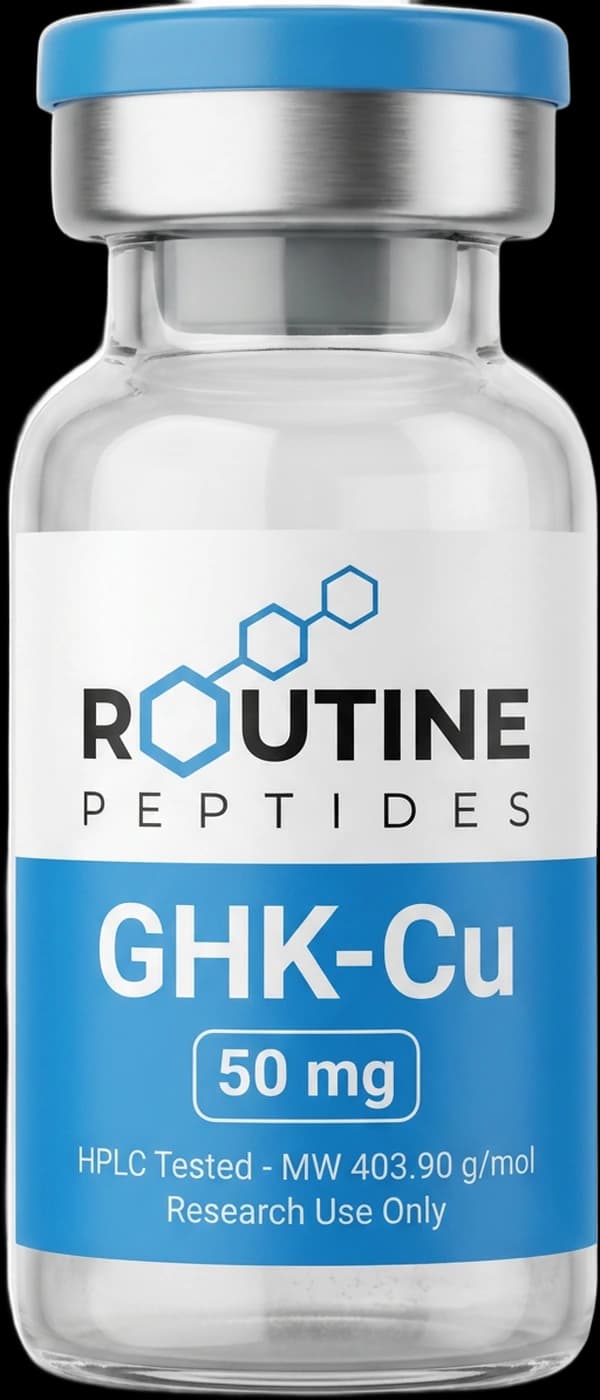
GHK-Cu research vial

Regenerative & Repair

GHK-Cu

Collagen Synthesis Studies

Third-party testedCOA per lotView COA · 99.88%
$4850mg · $0.96/mg

Size

Quantity

1

Ships from the United States with tracking · free shipping over $200

PassedSterility & Endotoxins
PassedNet Content & Purity
Research use only
Third-party tested
COA with every lot
Tracked shipping

Researchers also added

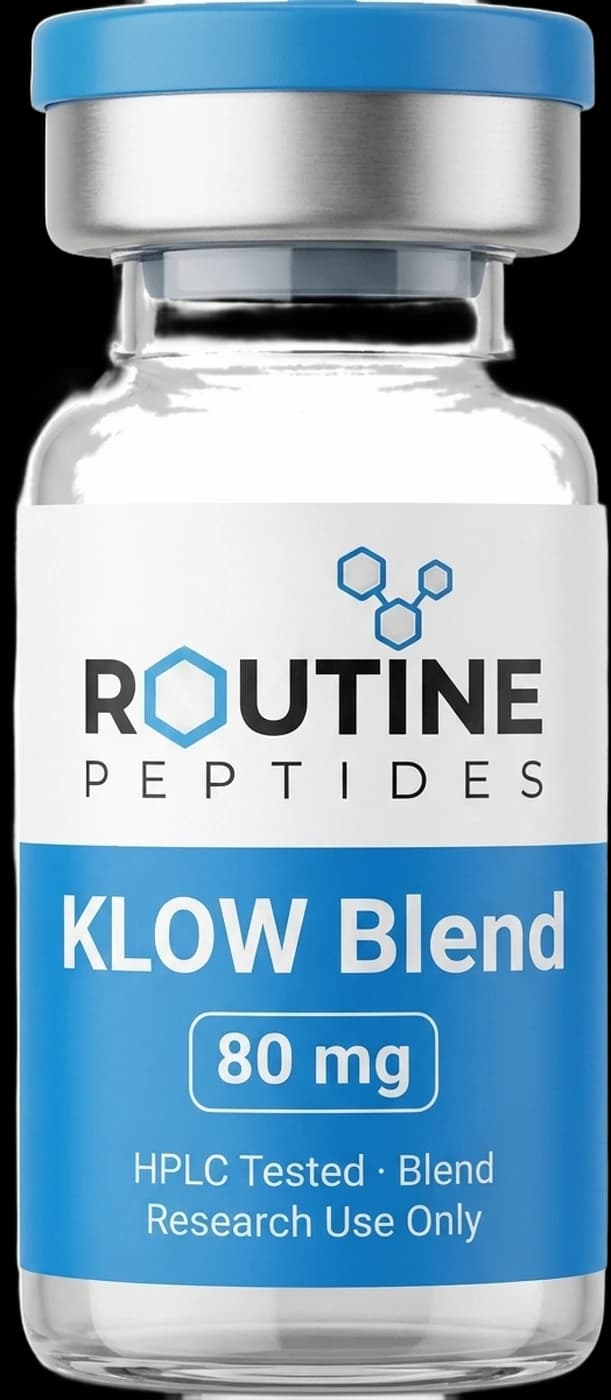
KLOW Blend

80mg

$168.00

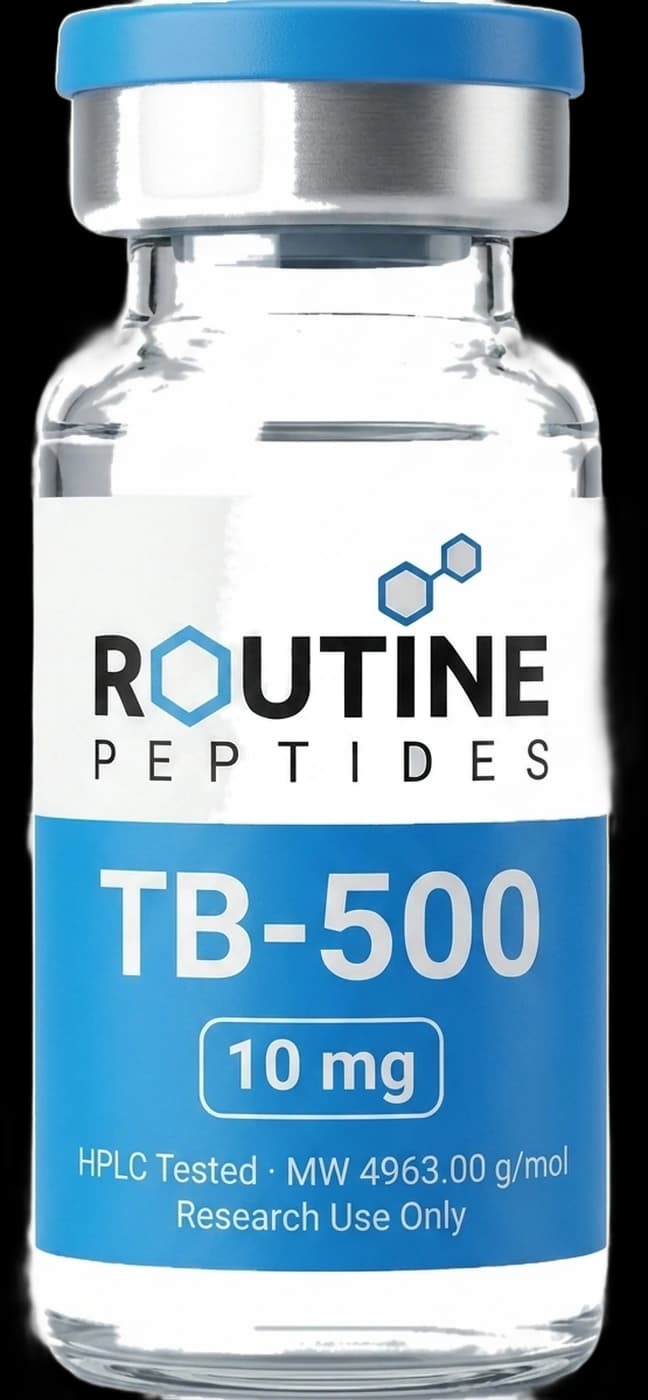
TB-500

10mg

$102.00

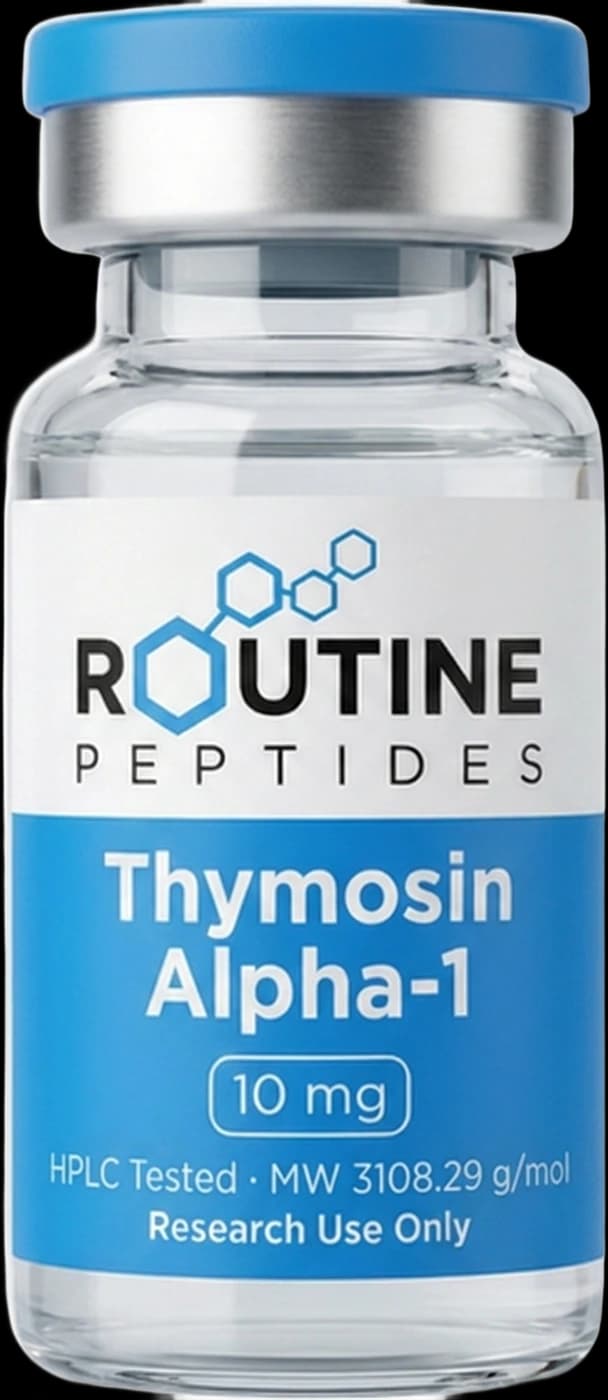
Thymosin Alpha-1

10mg

$102.00

Authenticity

Every vial carries a code

Scan the code on the label to pull up every published certificate for that compound — the same reports the third-party laboratory issued, batch by batch. Traceable from the laboratory that tested it to your bench.

Verify a batch →

Verified, lot by lot

Per lot
  • Independently tested

    Purity is quantified by reverse-phase HPLC and identity confirmed by mass spectrometry, by an outside laboratory rather than in-house.

  • A certificate for your lot

    The report that ships with your order describes the batch you received — not the product line, and not a representative sample.

  • COA-backed replacement

    If material does not match the certificate issued for its lot, we replace it or refund it. Send us the lot number and we will trace it.

  • Tracked dispatch

    Tracking is issued when the label is created, so the shipment is traceable from the moment it leaves us.

🧬
4000+
Genes Modulated
Gene expression reset toward health
📈
70%
Collagen Increase
Type I & III vs controls
🔬
130+
Published Studies
Preclinical research papers
🎯
4
Research Areas
Skin Regeneration · Hair Restoration · Gene Expression & more

About this compound

What GHK-Cu is

Copper-coordination complex

GHK-Cu is a copper-binding tripeptide that occurs naturally in human plasma, where it was first identified in 1973. Plasma concentrations decline substantially with age, which is part of what made it interesting to researchers. It is among the most-studied peptides in skin and connective-tissue literature, with published work covering collagen synthesis, gene expression and copper-dependent enzyme activity.

Formula
C₁₄H₂₄CuN₆O₄
Molecular weight
403.9 g/mol
Form
Lyophilized powder
CAS / ID
49557-75-7
Read the full GHK-Cu research monograph →

Full specification

Sequence
Gly-His-Lys-Cu(II)
Molecular weight
403.90 g/mol
Molecular formula
C₁₄H₂₄CuN₆O₄
Physical form
Lyophilized powder
Documented purity
Quantified by HPLC, reported per lot
Storage
-20°C for up to 24 months
Solubility
Water-soluble

How it works

How GHK-Cu works

The pathways GHK-Cu acts on, and what each one does. Signalling described from preclinical models.

Copper Transport & Signaling

Copper Delivery

The tripeptide binds copper(II) with high affinity and carries it to the cell, where the metal becomes available to the enzymes that depend on it. That delivery role — rather than any direct action of the peptide itself — is what most of the mechanistic literature attributes its effects to.

  • Binds copper(II) at high affinity
  • Activates lysyl oxidase for collagen crosslinking
  • Supports superoxide dismutase activity
ECM Remodeling & Repair

Collagen Synthesis

In fibroblast culture, exposure is reported to raise output of type I and III collagen alongside glycosaminoglycans and decorin. Those are the structural components of the extracellular matrix, which is why the compound recurs throughout connective-tissue repair work.

  • Collagen synthesis up 70% against controls
  • Glycosaminoglycan production raised
  • Decorin synthesis organises the matrix

Genomic Reprogramming

Gene Modulation

Expression profiling has reported changes across several thousand human genes following exposure, spanning DNA repair, antioxidant and inflammatory pathways. The breadth of that signature is unusual, and it is the reason the compound is cited in gene-modulation research at all.

  • Expression shifts reported across 4,000+ genes
  • DNA repair genes upregulated
  • Inflammatory gene expression suppressed

Uses & applications

What GHK-Cu is researched for

The main areas under study, and the study-reported figures behind them.

Dermatology

Skin Regeneration

Wound-healing and skin-ageing models measure collagen, elastin and glycosaminoglycan output after exposure. This is the largest single body of work on the compound.

Pickart et al. 2015

Trichology

Hair Restoration

Follicle size, growth rate and cycle transition are the measured endpoints, reported in preclinical models rather than human trials.

Pickart et al. 2012

Genomics

Gene Expression

Profiling work reports modulation across several thousand genes, spanning DNA repair, antioxidant and anti-inflammatory pathways.

Pickart & Margolina 2014

Protective

Antioxidant Defense

Chelation of free copper and upregulation of superoxide dismutase are the described routes, with oxidative damage measured as the outcome.

Maquart et al. 2014

What the published work measures

The endpoints reported across the literature for this compound. The figures belong to the individual papers, not to us.

  • Collagen Synthesis
  • Wound Contraction Rate
  • Antioxidant Capacity
  • Anti-Inflammatory Effect

Molecular structure

The GHK-Cu molecule

The deposited three-dimensional conformer for this compound, paired with its verified reference values.

Drag to rotate

48 atoms

ONCH

48 atoms, 48 bonds, C14H24N6O4. Deposited conformer from PubChem CID 73587, not a drawing.

Copper-coordination complex

Molecular formula
C₁₄H₂₄CuN₆O₄
Molecular weight
403.9 g/mol
Sequence length
3 residues
CAS / ID
49557-75-7
Physical form
Lyophilized powder
Documented purity
Quantified by HPLC, reported per lot

Third-party verified

Independently tested, lot by lot.

Every batch of GHK-Cu is sent to an accredited independent laboratory before it ships. Here is what we screen for.

HPLC purity analysis

Quantifies purity and reports it on the lot certificate

Mass spectrometry

Verifies the exact molecular identity

Heavy metals screening

Lead, arsenic, cadmium & mercury

Endotoxins (LAL)

Bacterial endotoxin levels

Sterility testing

No microbial contamination

Net peptide content

Actual peptide mass per vial verified

FAQ

Common questions about GHK-Cu

What is GHK-Cu?

+

GHK-Cu is a copper-binding tripeptide that occurs naturally in human plasma, where it was first identified in 1973. Plasma concentrations decline substantially with age, which is part of what made it interesting to researchers. It is among the most-studied peptides in skin and connective-tissue literature, with published work covering collagen synthesis, gene expression and copper-dependent enzyme activity.

What is GHK-Cu researched for?

+

Published research on GHK-Cu concentrates on Skin Regeneration, Hair Restoration, Gene Expression and Antioxidant Defense. Each of those areas is summarised further up this page with the citation it comes from, and the full reference list — 4 indexed publications — sits at the bottom. Study designs and concentrations vary considerably between publications, so the primary sources are worth reading directly.

How does GHK-Cu work?

+

The literature describes GHK-Cu acting across Copper Transport & Signaling, ECM Remodeling & Repair and Genomic Reprogramming, reported respectively as Copper Delivery, Collagen Synthesis and Gene Modulation. Those pathways are drawn from preclinical models rather than clinical work, and they describe what has been observed rather than a settled mechanism — the individual pathway cards above cite what each one is based on.

What are the molecular specifications for GHK-Cu?

+

GHK-Cu has a molecular formula of C₁₄H₂₄CuN₆O₄, an average mass of 403.9 g/mol and the sequence Gly-His-Lys-Cu(II). It is indexed under CAS 49557-75-7. It ships as lyophilized powder. Those are nominal reference values for the parent compound. The identity of the specific material you receive is confirmed by mass spectrometry and reported on that lot's certificate.

How should GHK-Cu be stored and reconstituted?

+

Store the sealed vial at -20°C, protected from light and moisture, and let it reach room temperature before opening so condensation does not form on cold powder. GHK-Cu is water-soluble; reconstitute by directing the diluent down the vial wall rather than onto the powder, then swirl to dissolve rather than shaking. Keep reconstituted solution refrigerated and avoid repeated freeze-thaw cycles — solutions are far less stable than lyophilized powder.

Is GHK-Cu approved for human use?

+

No. GHK-Cu is supplied strictly for in-vitro laboratory research and development. It is not a drug, food, supplement or cosmetic, it has not been evaluated by the FDA, and it is not intended for human or animal consumption, ingestion, injection or any in-vivo use. Ordering confirms you are a qualified researcher or institution purchasing on that basis.

Cited sources

Peer-reviewed literature

Independent published research indexed from PubMed and peer-reviewed journals — not Routine Peptides claims.

  1. [1]PubMedGHK peptide as a natural modulator of multiple cellular pathways in skin regeneration (opens in a new tab)2015 · Pickart L et al.View source →
  2. [2]PubMedThe human tripeptide GHK-Cu in prevention of oxidative stress and degenerative conditions (opens in a new tab)2012 · Pickart L et al.View source →
  3. [3]PubMedTripeptide GHK induces programmed cell death in SH-SY5Y neuroblastoma cells (opens in a new tab)2014 · Maquart FX et al.View source →
  4. [4]PubMedGHK and DNA: Resetting the human genome to health (opens in a new tab)2014 · Pickart L, Margolina A.View source →

For research use only

Not for human or veterinary use. For in-vitro laboratory research only. These statements have not been evaluated by the FDA; this product is not intended to diagnose, treat, cure, or prevent any disease. Sold exclusively to qualified researchers and institutions.

Before you order

Quality Becomes RoutineMeasured. Verified. Documented.

Every production run is analyzed by an independent laboratory, and the certificate for your lot travels with the order — not a catalog-wide document, and not a summary written by us.