
Research monograph · 39-amino-acid dual gip/glp-1 receptor agonist (tirzepatide; aib2/aib13, c20 diacid)
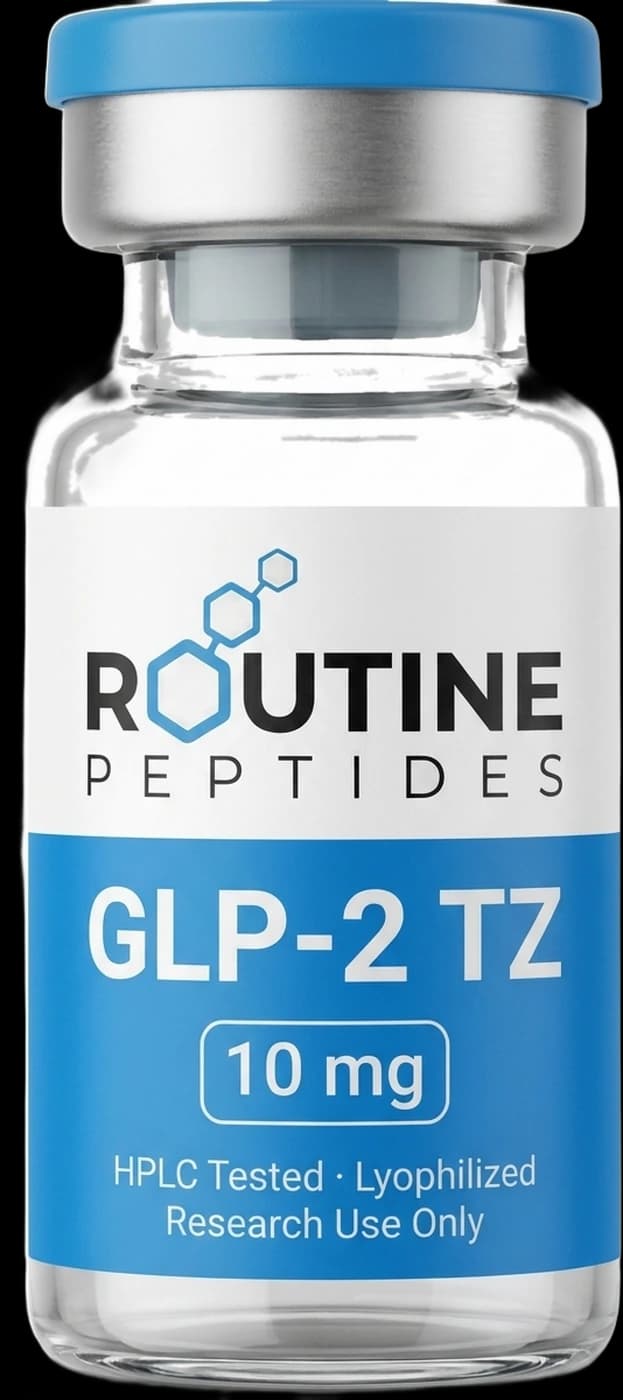
GLP-2 TZResearch monograph
Dual GIP & GLP-1 Studies
This monograph collects what the published literature reports about GLP-2 TZ — its mechanisms, the areas it is studied in, its molecular record and the sources behind them. Its backbone is derived from GIP rather than GLP-1, with aminoisobutyric acid at positions 2 and 13 blocking DPP-4 cleavage and a C20 fatty diacid enabling albumin binding. The reported half-life is roughly five days. Research endpoints center on metabolic and glycemic regulation through the two receptors together.
For laboratory research use only — not for human or animal use
FAQ
Common questions about GLP-2 TZ
What is GLP-2 TZ?
+
GLP-2 TZ is tirzepatide — a 39-residue dual agonist of the GIP and GLP-1 receptors. Its backbone is derived from GIP rather than GLP-1, with aminoisobutyric acid at positions 2 and 13 blocking DPP-4 cleavage and a C20 fatty diacid enabling albumin binding. The reported half-life is roughly five days. Research endpoints center on metabolic and glycemic regulation through the two receptors together.
How should GLP-2 TZ be stored and reconstituted?
+
Store the sealed vial at -20°C, protected from light and moisture, and let it reach room temperature before opening so condensation does not form on cold powder. Keep reconstituted solution refrigerated and avoid repeated freeze-thaw cycles — solutions are far less stable than lyophilized powder.
Is GLP-2 TZ approved for human use?
+
No. GLP-2 TZ is supplied strictly for in-vitro laboratory research and development. It is not a drug, food, supplement or cosmetic, it has not been evaluated by the FDA, and it is not intended for human or animal consumption, ingestion, injection or any in-vivo use. Ordering confirms you are a qualified researcher or institution purchasing on that basis.